








Chapter 1IMAT Biology
Introduction to Biology
Welcome to the world of IMAT biology! In this textbook, we will be exploring the fascinating world of living things and how they work. This book is specifically designed to help students prepare for the IMAT and understand the important concepts that will be tested on the exam.
In this textbook, we will learn about the basic concepts of biology, including cells, DNA, and the different processes that keep living organisms functioning.
It is important to not just read the material in this book, but to also put what you have learned into practice. This means actively engaging with the questions and activities provided, as well as conducting your own research and experiments by watching YouTube videos of real life experiment and tutorials on the different applications of Biology. By doing this, you will not only improve your understanding of the material, but you will also develop important critical thinking and problem-solving skills that will be useful on the IMAT.
Additionally, we recommend that you supplement your study of this textbook with other available biology resources recommended by EnterMedSchool.com. By using various study materials, you can ensure that you have a well-rounded understanding of the essential concepts covered on the IMAT.
So let's get started on this exciting journey into the world of biology! Whether you are a student just starting out in the field, or a lifelong learner looking to expand your knowledge, this textbook has something for everyone. Let's dive in and discover the incredible world of living things!
Section 1.1
The Properties of Life
Life is a complex and diverse phenomenon that is characterized by certain unique properties. These properties include metabolism, growth and development, response to stimuli, homeostasis, reproduction, and evolution. Metabolism refers to the process by which living things transform energy and matter in order to sustain themselves. Growth and development involve the change and growth that living things undergo over time. Response to stimuli refers to the ability of living things to sense and respond to changes in their environment. Homeostasis involves the maintenance of a stable internal environment, even when the external environment changes. Reproduction is the ability of living things to produce offspring, either sexually or asexually. Finally, evolution is the process by which living things can change and adapt over time through natural selection. Understanding these properties of life can help us better understand the complex and fascinating world of living organisms.
- Order: Living things are highly organized and have a complex structure that is specific to their species. For example, cells are the basic unit of life, and different types of cells have different structures and functions that enable them to carry out specialized tasks. At higher levels of organization, living things are composed of tissues, organs, and organ systems that work together to maintain the functions of the organism as a whole.
- Energy processing: Living things require energy to carry out their life processes, such as metabolism, growth, and movement. They obtain energy from their environment in the form of food, and then use cellular processes such as respiration and photosynthesis to convert that energy into a form that can be used to power cellular processes.
- Growth and development: Living things grow and develop over time, often following a specific pattern or sequence. This growth and development is controlled by genes, which provide the instructions for the synthesis of proteins and other cellular components necessary for growth and development. For example, a fertilized egg develops into a multicellular organism through a series of developmental stages, ultimately becoming a fully formed adult organism.
- Evolutionary adaptation: Living things are capable of adapting to their environment over time through the process of evolution. This allows them to better survive and reproduce in changing environmental conditions. Adaptations can be structural, such as the development of wings in birds for flight, or behavioral, such as the migration of animals to avoid harsh environmental conditions.
- Regulation: Living things have mechanisms for maintaining internal conditions, or homeostasis. This helps them maintain a stable internal environment despite changes in the external environment. For example, animals can regulate their body temperature, pH balance, and other physiological variables to keep their internal environment within a narrow range of values.
- Response to the environment: Living things can sense and respond to changes in their environment. This allows them to survive and reproduce in their environment. For example, plants can sense the presence of light and grow towards it, while animals can move towards sources of food or away from predators.
- Reproduction: Living things are capable of producing offspring through the process of reproduction. This ensures the continuation of their species over time. Reproduction can occur through sexual or asexual means. Sexual reproduction involves the fusion of gametes (sperm and egg cells) from two individuals to produce genetically diverse offspring. Asexual reproduction involves the production of genetically identical offspring from a single individual.
Section 1.2
The Levels of Biological Organization
The levels of biological organization refer to the various levels of complexity at which living things can be organized, from the smallest level of molecules to the largest level of the biosphere. Each level of organization builds upon the one before it and has its own unique properties and characteristics. Understanding the levels of biological organization is important in studying the structure and function of living things, as well as how they interact with each other and their environment. It allows us to understand the complexity of life on Earth and how different levels of organization are interconnected.
- Molecules: The smallest level of biological organization, molecules are the building blocks of life. They include DNA, proteins, and carbohydrates, among others.
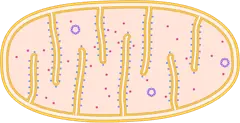
- Organelles: Organelles are specialized structures within cells that carry out specific functions. Examples include the mitochondria, which generate energy for the cell, and the nucleus, which contains the cell's genetic material.
- Cells: Cells are the basic unit of life and are capable of carrying out all of the processes necessary for life. They can be either prokaryotic (without a nucleus) or eukaryotic (with a nucleus).
- Tissues: Tissues are groups of cells that work together to perform a specific function. Examples include epithelial tissue, which covers and lines surfaces, and muscle tissue, which enables movement.
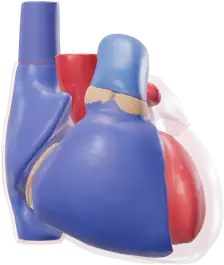
- Organs: Organs are composed of two or more tissues and are specialized for a specific function. Examples include the heart, lungs, and liver.
- Organisms: Organisms can be individuals, such as a human, or they can be part of a larger group, such as a colony of ants or a flock of birds.
- Populations: Populations are groups of individuals of the same species living in the same area.
- Communities: Communities are groups of different species living in the same area.
- Ecosystems: Ecosystems are communities of living organisms together with their physical and chemical environment.
- The biosphere: The biosphere encompasses all living things and their environments on Earth. It includes all of the ecosystems on the planet and extends from the depths of the oceans to the highest mountains.
Section 1.3
Chemical Bonds
Chemical bonds are the forces that stick atoms together to make molecules and compounds. Some bonds, called covalent bonds, happen when atoms share electrons. Other bonds, called ionic bonds, happen when electrons are transferred from one atom to another. There are also weaker bonds, like hydrogen bonds and van der Waals forces, that are important in shaping the 3D structure of molecules and biological molecules. Understanding chemical bonds is important for figuring out how molecules behave and interact with each other in fields like chemistry, biology, and materials science.
Covalent Bonds
Covalent bonds are a type of chemical bond formed by the sharing of a pair of valence electrons between two atoms. In a covalent bond,the atoms are held together by the shared electrons, which creates a stable molecule or compound. For example, in a hydrogen molecule (H2), two hydrogen atoms share a pair of electrons to form a covalent bond.
There are also polar and nonpolar covalent bonds.In a nonpolar covalent bond, the shared electrons are equally shared between the two atoms, and the molecule has no partial charges. An example of a nonpolar covalent bond is the bond between two oxygen atoms (O2) in an oxygen molecule.
In a polar covalent bond, the shared electrons are not equally shared between the two atoms, and the molecule has partial charges. An example of a polar covalent bond is the bond between hydrogen and oxygen atoms in a water molecule (H2O). In this molecule, the oxygen atom has a partial negative charge, and the hydrogen atoms have a partial positive charge.
Overall, covalent bonds are important in holding molecules and compounds together in many biological and chemical systems.
Ionic Bonds
Ionic bonds are a type of chemical bond that form when two oppositely charged ions attract each other. Ions are formed when an atom gains or loses electrons, resulting in a net positive or negative charge. For example, when a sodium atom loses an electron, it becomes a positively charged ion (Na+), and when a chlorine atom gains an electron, it becomes a negatively charged ion (Cl-). These ions can then attract each other to form an ionic bond, as in the case of sodium chloride (NaCl), commonly known as table salt.
In an ionic bond, the electron transfer is not shared equally between the atoms, as in covalent bonds. Instead, one atom completely loses electrons, and the other atom completely gains electrons, resulting in a complete transfer of electrons from one atom to the other. This creates two charged ions that attract each other to form an ionic bond.
Ionic bonds are common in many biological and chemical systems, such as the formation of salts and minerals in the body. They are also important in the function of nerve and muscle cells, where the exchange of ions helps to generate electrical signals.
Weak Chemical Interactions
Weak chemical interactions are a type of bond that occur between molecules or within a molecule, which are weaker than covalent and ionic bonds. They are important in many biological systems, where they help to stabilize and shape molecules, such as proteins and DNA. Weak chemical interactions can be divided into three main types: hydrogen bonds, van der Waals interactions, and hydrophobic interactions. These types of interactions play a critical role in the structure and function of biomolecules, as well as in the interactions between molecules in chemical reactions.
- Hydrogen bonds - a type of bond that occurs when a hydrogen atom is shared between two electronegative atoms, such as nitrogen or oxygen. Hydrogen bonds are weaker than covalent bonds but stronger than van der Waals interactions. They are important in stabilizing the structure of biological molecules, such as the double helix structure of DNA. An example of hydrogen bonding can be seen in the bonding between water molecules, where hydrogen bonds form between the hydrogen atoms of one water molecule and the oxygen atoms of neighboring water molecules.
- Van der Waals interactions - a type of interaction that occurs between molecules due to fluctuations in electron density. Van der Waals interactions are weak and occur between all molecules, but are particularly important in large molecules, such as proteins, where they contribute to the three-dimensional structure of the molecule. An example of van der Waals interactions can be seen in the attraction between nonpolar molecules, such as in the interactions between the carbon-hydrogen bonds in hydrocarbons.
- Hydrophobic interactions - a type of interaction that occurs between nonpolar molecules in the presence of water. Hydrophobic interactions are the result of the tendency of nonpolar molecules to exclude water molecules. In biological systems, they play a role in the folding and stability of proteins, as well as in the formation of cell membranes. An example of hydrophobic interactions can be seen in the aggregation of oil droplets in water, where the oil molecules aggregate to minimize contact with water.
Section 1.4
The Role of Water in Life
The water molecule has a special shape that allows it to form hydrogen bonds with other water molecules. This is what gives water some amazing properties that are super important for living things.
Water is a great solvent, which means that it can dissolve lots of different things. This is because the hydrogen bonds in water allow ions and other polar molecules to dissolve easily. Water is also really good at holding onto heat, which helps to keep the temperature of living things stable.
Water has some other unique properties, too, like the fact that it's less dense as a solid than as a liquid. This is why ice floats on top of water and doesn't sink to the bottom. Water also has cohesive properties, which means that it sticks to itself really well. This is why water can travel up really tall plants from the roots to the leaves.
Water is so important for life that about 60-70% of the human body is made up of it! Without water, life just wouldn't be the same. That's why scientists are always looking for water on other planets - they want to see if there could be life there too.
Water is a polar molecule, meaning that it has a positive charge at one end (the hydrogen atoms) and a negative charge at the other end (the oxygen atom). This polarity gives water some important properties that are essential for life.
One of the most important properties of water is its ability to dissolve a wide variety of substances. This is because the positive and negative ends of the water molecule can attract and bind to the ions of other molecules, allowing them to dissolve and be carried throughout the body. For example, water helps to transport nutrients, electrolytes, and oxygen throughout the body and helps to regulate body temperature by dissipating heat.
Water's polarity also makes it a good solvent for many biological molecules. This is because the positive and negative ends of the water molecule can interact with the charged or polar groups on biological molecules, allowing them to dissolve and interact with one another. This is important for many biological processes, including chemical reactions, enzyme function, and the folding and stability of proteins.
Water's polarity also gives it a high specific heat capacity, which means that it can absorb or release a lot of heat without changing temperature. This property allows water to act as a thermal buffer, helping to regulate the temperature of living organisms and the environment.
Water's polarity is crucial for many aspects of biology and the function of living things. It plays a vital role in many biological processes and is essential for life.
High Heat Capacity
Water has the ability to absorb or release large amounts of heat without experiencing a significant change in temperature, a property known as high heat capacity. This characteristic is due to the presence of hydrogen bonds between water molecules. Water's specific heat capacity, which refers to the amount of heat required to raise the temperature of one gram of a substance by one degree Celsius, is higher than that of any other liquid. For water, this value is one calorie. As a result, it takes a longer time for water to heat up or cool down compared to other substances. In fact, the specific heat capacity of water is about five times higher than that of sand. This is one reason why the land cools faster than the water in the sea.
The high heat capacity of water also plays a role in the regulation of body temperature in warm-blooded animals. Water acts as a thermal buffer, helping to evenly distribute heat throughout the body and maintain a more stable temperature. It functions similarly to a car's cooling system, which transports heat from warm areas to cooler areas. By doing so, water helps to prevent overheating or rapid cooling of the body.
Heat of Vaporization
Water has a high heat of vaporization, meaning that it requires a large amount of energy to change from a liquid to a gas (The heat of vaporization is defined as the amount of heat needed to turn 1 g of a liquid into a vapor). It takes about 540 calories of energy to vaporize one gram of water. This process occurs on the surface of water and is facilitated by the breaking of hydrogen bonds between water molecules. These bonds make it difficult for water molecules to separate from each other, which is necessary for the water to enter its gaseous phase (steam). This is why water requires more heat to boil than other liquids, such as ethanol, which forms one less hydrogen bond between its molecules compared to water.
Once the water reaches its boiling point of 100° Celsius (212° Fahrenheit), the heat is finally able to break the hydrogen bonds between the water molecules, and the kinetic energy between the water molecules allows them to escape from the liquid as a gas (with an increased temperature, the particles gain kinetic energy and move faster). Even when the water is below its boiling point, some of the surface water molecules can gain enough energy from other water molecules to escape and vaporize, a process known as evaporation.
The fact that hydrogen bonds need to be broken for water to evaporate means that a significant amount of energy is used in the process. As the water evaporates, energy is absorbed, causing the environment where the evaporation is taking place to cool. In many living organisms, including humans, the evaporation of sweat, which is 90% water, helps to regulate body temperature by cooling the surface of the body.
Solvent Properties
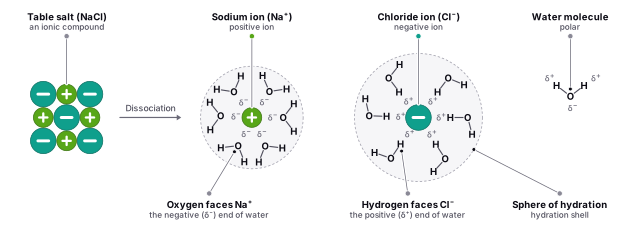
As mentioned earlier, water is a polar molecule, meaning that it has a positive charge on one end (the hydrogen atoms) and a negative charge on the other end (the oxygen atom). This polarity allows water to dissolve other polar molecules and ionic compounds, making it a good solvent. When ions or polar molecules are added to water, the charges on these molecules interact with the positive and negative ends of the water molecule, forming hydrogen bonds. This creates a “sphere of hydration,” or a hydration shell, around the particle, which helps to keep it separated or dispersed in the water.
One common example is when ionic compounds such as table salt (NaCl) are added to water, the molecules of NaCl dissociate into Na+ and Cl– ions. The positive sodium ion is surrounded by the negative charge of the oxygen on the water molecule while the negative chloride ion is surrounded by the positive charge of the hydrogen on the water molecule. This process, known as dissociation, occurs when atoms or groups of atoms break off from molecules and form ions.
Find it in the figure
Coming soon for figure 1.1
The Cohesive and Adhesive Properties of Water
Water has two special properties that help it stick to things: Cohesion and Adhesion.
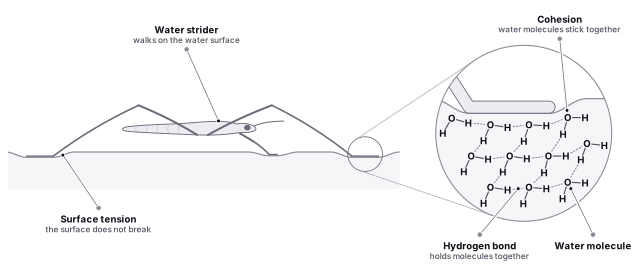
Cohesion and adhesion are two important properties of water that arise due to the unique properties of the water molecule and its ability to form hydrogen bonds. Cohesion refers to the ability of water molecules to stick together, which is why water droplets can form and also why it can flow. Hydrogen bonds between water molecules create an attractive force that keeps the molecules together, which is why water has a high surface tension and can form droplets.
Adhesion, on the other hand, refers to the ability of water to stick to other surfaces. This is because the hydrogen bonds that hold water molecules together can also form between water molecules and other substances, such as the surfaces of plant cells. Adhesion of water to the walls of plant cells allows water to be transported upwards from the roots to the leaves, in a process known as capillary action.
Cohesion and adhesion are important properties of water that have many biological implications. For example, the ability of water to be transported against gravity through the vessels of plants is due to the cohesive and adhesive properties of water. The surface tension of water also allows certain insects, such as water striders, to walk on water without breaking the surface..
Find it in the figure
Coming soon for figure 1.2
Water's cohesive and adhesive properties are also important for many other things, like how water moves through the earth and how it helps to keep our bodies hydrated. Without these unique properties, life as we know it would be very different!
Section 1.5
Acid and Bases
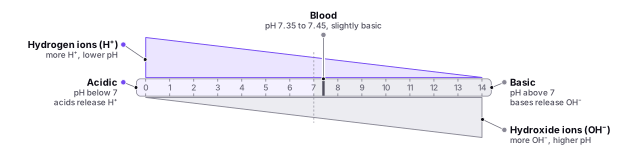
Acids and bases are important chemical concepts that have many applications in biology. In general, acids are substances that release hydrogen ions (H+) when dissolved in water, while bases are substances that release hydroxide ions (OH-) when dissolved in water. The strength of an acid or base is determined by its dissociation constant, or the extent to which it releases these ions.
In biological systems, many important molecules are either acidic or basic. For example, amino acids (the building blocks of proteins) have both acidic and basic functional groups. The pH of a solution (which is a measure of its acidity or basicity) can also affect the structure and function of biological molecules. For example, enzymes (which are proteins that catalyze chemical reactions) have an optimal pH range in which they are most active. If the pH of the environment surrounding an enzyme is too acidic or too basic, the enzyme may denature (lose its shape and function).
The pH of biological systems is tightly regulated through a number of mechanisms. One of the most important of these is the buffering capacity of biological fluids. Buffers are substances that can accept or donate hydrogen ions, depending on the pH of the surrounding environment. This helps to maintain a relatively constant pH in biological systems, which is important for the proper functioning of many biological processes.
In summary, acids and bases are important chemical concepts that have many applications in biology. In biological systems, many important molecules are either acidic or basic, and the pH of biological fluids is tightly regulated to maintain proper function.
Acids
Acids are an important class of chemical compounds that have a sour taste and can be corrosive to certain materials. In terms of their chemistry, acids are defined as substances that release hydrogen ions (H+) when dissolved in water. The strength of an acid is determined by its dissociation constant, or the extent to which it releases these hydrogen ions.
One of the most common acids found in biological systems is hydrochloric acid (HCl), which is produced by cells in the stomach to aid in the digestion of food. Another important acid is carbonic acid (H2CO3), which is formed when carbon dioxide (CO2) dissolves in water. Carbonic acid is an important component of the bicarbonate buffering system, which helps to regulate the pH of blood and other biological fluids.
Acids can also play important roles in chemical reactions in biological systems. For example, many enzymes (which are proteins that catalyze chemical reactions) require an acidic environment to function properly. In addition, some reactions in metabolism involve the release of protons (H+) as a way of transferring energy from one molecule to another.
Despite their importance, acids can also be harmful to biological systems if their concentration becomes too high. This can cause a decrease in pH, which can lead to the denaturation of proteins and other biomolecules. To prevent this, biological systems have a number of mechanisms in place to regulate the concentration of acids and maintain a relatively constant pH.
Bases
Bases, also known as alkaline substances, are another important class of chemical compounds that have a bitter taste and a slippery feel. In terms of their chemistry, bases are defined as substances that release hydroxide ions (OH-) when dissolved in water. The strength of a base is determined by its dissociation constant, or the extent to which it releases these hydroxide ions.
One of the most common bases found in biological systems is sodium hydroxide (NaOH), which is used by cells to regulate the pH of the extracellular fluid. Another important base is ammonia (NH3), which is produced by cells in the kidneys to help remove excess hydrogen ions from the body.
Bases can also play important roles in chemical reactions in biological systems. For example, many enzymes require a basic environment to function properly. In addition, some reactions in metabolism involve the removal of protons (H+) from molecules, which can be facilitated by the presence of a base.
Similar to acids, bases can be harmful to biological systems if their concentration becomes too high. This can cause an increase in pH, which can also lead to the denaturation of proteins and other biomolecules. To prevent this, biological systems have a number of mechanisms in place to regulate the concentration of bases and maintain a relatively constant pH.
In summary, bases are an important class of chemical compounds that have many applications in biology. In biological systems, many important molecules are either acidic or basic, and the pH of biological fluids is tightly regulated to maintain proper function.
Biological Buffers
A pH buffer is a special substance that helps to keep the pH (a measure we use to know how acidic or basic a substance is by counting the amount of H+ or OH− in the solution) at a stable level. In the human body, pH buffers are vital because they help to maintain the proper pH levels in different parts of the body.
For example, the pH of your blood should be kept between 7.35 and 7.45, a slightly basic pH. This is important because if the pH of your blood gets too high or too low, it can be harmful to your body. The pH buffer in your blood helps to keep the pH at the right level by absorbing or releasing extra hydrogen ions or hydroxide ions, which can change the pH.
There are many types of pH buffers in the human body, and they are found in different parts of the body, like the blood, the stomach, and the urine. These buffers help to maintain the proper pH levels in these different parts of the body, which is essential for processes such as digestion and metabolism.
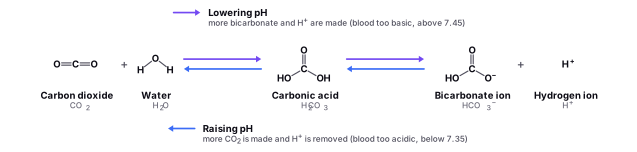
The main buffer system in our body is the bicarbonate buffer system, which involves the equilibrium reaction:
H2CO3 + H2O ⇌ HCO3−+ H3O+
This system works by regulating the concentration of bicarbonate ions (HCO3-) and hydrogen ions (H+) in the blood. When the pH of the blood starts to become too acidic (below 7.35), the bicarbonate ions react with the excess hydrogen ions to form carbonic acid (H2CO3), which can then be broken down into water (H2O) and carbon dioxide (CO2). This process helps to remove the excess hydrogen ions and restore the pH of the blood to the proper level.
On the other hand, when the pH of the blood starts to become too basic (above 7.45), the reverse reaction occurs. The carbonic acid breaks down into bicarbonate ions and hydrogen ions, releasing hydrogen ions and restoring the pH of the blood to the proper level.
Find it in the figure
Coming soon for figure 1.3
Imagine that you are in charge of maintaining the pH of a swimming pool. The pool's pH should be around 7.4, which is slightly basic. However, sometimes the pH of the pool can become too acidic (below 7.4) or too basic (above 7.4).
One way to maintain the pH of the pool is to use a buffer, just like the bicarbonate buffer system in the blood. In this case, let's say that the buffer is a special chemical that you can add to the pool to help keep the pH at the right level.
When the pH of the pool becomes too acidic, you can add the buffer to the pool. The buffer will react with the excess hydrogen ions (H+) in the water, which causes the pH to become too low. This reaction will remove the excess hydrogen ions and restore the pH of the pool to the proper level.
Find it in the figure
Coming soon for figure 1.4