







Chapter 6IMAT Biology
Photosynthesis
Photosynthesis is the process by which green plants, algae, and some bacteria convert light energy into chemical energy in the form of . This chemical energy is stored in the bonds of glucose molecules and is used by cells for various metabolic processes, including cellular respiration.
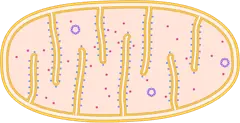
As we discussed in the previous chapter, cellular respiration is the process by which cells convert the chemical energy stored in glucose into , the primary energy currency of cells. This process occurs in the mitochondria of cells and involves the breakdown of glucose through a series of chemical reactions that release energy.
In this chapter, it is crucial to remember that both photosynthesis and cellular respiration are essential processes for life on Earth, and both occur in plants. Photosynthesis is the primary source of energy for almost all living organisms, as it provides the energy needed for the synthesis of organic compounds and the release of oxygen into the atmosphere. Cellular respiration, on the other hand, is the process by which cells use the energy stored in organic compounds to power their various functions and activities.
While photosynthesis and cellular respiration are separate processes, they are also interconnected. The glucose produced through photosynthesis is used as a source of energy during cellular respiration, and the oxygen produced during photosynthesis is partially used as a reactant during cellular respiration. Overall, the balance between photosynthesis and cellular respiration is essential for maintaining the energy balance in living organisms and the overall health of the planet.
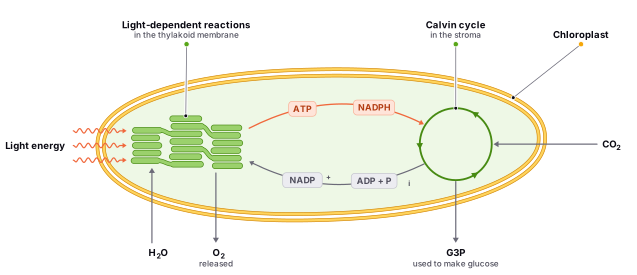
Light energy is used to drive the conversion of carbon dioxide and water into glucose and oxygen through a series of chemical reactions. These reactions can be divided into two main stages: the light-dependent reactions and the light-independent reactions.
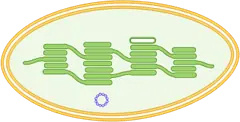
The light-dependent reactions occur in the thylakoid membranes of the chloroplasts and involve the absorption of light energy by pigment molecules, the transfer of this energy to ATP and NADPH, and the release of oxygen as a byproduct.
Pigments are molecules that are able to absorb light, and they do this because they contain electrons that can be excited by the energy of light. When light is absorbed by a pigment, it causes the electrons in the pigment to become excited and move to a higher energy level.
The color of a pigment is determined by the wavelengths of light that it absorbs. Different pigments absorb different wavelengths of light, and this is what gives them their characteristic colors. For example, chlorophyll, the pigment found in plants, absorbs light in the blue and red wavelengths, which is why plants appear green (the color that is not absorbed is reflected and appears to our eyes as the color of the object).
Pigments are important for a variety of biological processes, including photosynthesis in plants, vision in animals, and the synthesis of vitamins in some microorganisms. They are also used in many everyday products, such as paints, dyes, and food coloring.
The light-independent reactions, also known as the Calvin cycle, occur in the stroma of the chloroplasts and involve the conversion of carbon dioxide into glucose using the ATP and NADPH produced during the light-dependent reactions.
Overall, the process of photosynthesis can be summarized by the following equation:
6 CO2 + 6 H2O + light → C6H12O6 + 6 O2
This equation shows that photosynthesis involves the conversion of carbon dioxide and water into glucose and oxygen using light energy as the driving force. The glucose produced during photosynthesis is used by cells for various metabolic processes, including cellular respiration, and oxygen is released into the atmosphere.
Find it in the figure
Coming soon for figure 6.1
Section 6.1
Light-Dependent Reactions
The light-dependent reactions of photosynthesis are a series of chemical reactions that occur in the thylakoid membranes of the chloroplasts of plant cells. These reactions involve the absorption of light energy by pigment molecules, the transfer of this energy to ATP and NADPH, and the release of oxygen as a byproduct.
The light-dependent reactions are initiated when light energy is absorbed by pigment molecules, such as chlorophyll, in the thylakoid membranes. This energy is used to transfer electrons from water molecules to NADP+, a process known as photolysis. The electrons are then used to power the synthesis of ATP and NADPH, which are important energy-carrying molecules used in the light-independent reactions.
The light-dependent reactions are also known as the electron transport chain because they involve the transfer of electrons from one molecule to another. This transfer of electrons is accompanied by the release of energy, which is used to power the synthesis of ATP.
Here is a more detailed explanation of the light-dependent reactions:
1. Photosystem II (PSII) activation:
- Light energy is absorbed by chlorophyll and accessory pigments within the light-harvesting complexes (LHCs) of PSII.
- The absorbed energy is transferred to the reaction center of PSII, where it excites a pair of chlorophyll a molecules called P680.
- Excited P680 releases an electron, which is captured by the primary electron acceptor, a molecule called plastoquinone (PQ).
2. Photolysis of water:
- To replace the lost electron, PSII extracts electrons from water molecules through a process called photolysis.
- Photolysis results in the production of oxygen gas (O2) as a byproduct and the release of protons (H+) into the thylakoid lumen.
3. Electron transport chain (ETC) and proton gradient:
- The electrons from PQ are transferred along the ETC, which includes the cytochrome b6f complex and plastocyanin (PC).
- As the electrons move through the ETC, protons are pumped from the stroma into the thylakoid lumen, creating a proton gradient across the thylakoid membrane.
4. Photosystem I (PSI) activation:
- Meanwhile, light energy is also absorbed by the LHCs of PSI, and the energy is transferred to the PSI reaction center, where it excites a pair of chlorophyll a molecules called P700.
- Excited P700 releases an electron, which is captured by the primary electron acceptor, a molecule called ferredoxin (Fd).
5. Formation of NADPH:
- The electrons from Fd are transferred to NADP+ through the enzyme ferredoxin-NADP+ reductase (FNR), reducing it to NADPH.
- NADPH is then used as an energy source in the light-independent reactions (Calvin cycle).
6. ATP synthesis (photophosphorylation):
- The proton gradient generated by the ETC and photolysis drives the synthesis of ATP through a process called photophosphorylation.
- ATP synthase, an enzyme embedded in the thylakoid membrane, uses the energy from the proton gradient to produce ATP from ADP and inorganic phosphate (Pi).
In summary, the light-dependent reactions of photosynthesis involve the absorption of light energy, the generation of a proton gradient through electron transport, and the synthesis of ATP and NADPH. These energy-rich molecules are used in the light-independent reactions (Calvin cycle) to fix carbon dioxide and produce sugars. The light-dependent reactions also produce oxygen gas as a byproduct, which is released into the atmosphere through the process of photolysis.
Section 6.2
Light Independent Reaction
The light-independent reactions of photosynthesis, also known as the Calvin cycle or the dark reactions, are a series of chemical reactions that occur in the stroma of the chloroplasts of plant cells. These reactions involve the conversion of carbon dioxide into glucose using the ATP and NADPH produced during the light-dependent reactions.
The light-independent reactions are initiated when carbon dioxide enters the stroma of the chloroplasts. The carbon dioxide is then converted into a carbohydrate, such as glucose, through a series of chemical reactions known as the Calvin cycle.
During the Calvin cycle, the carbon dioxide is combined with a 5-carbon compound called ribulose bisphosphate (RuBP) to form a 3-carbon compound called (G3P). This reaction requires the energy provided by ATP and NADPH produced during the light-dependent reactions.
The G3P produced during the Calvin cycle is then converted into glucose or other organic compounds through a series of additional chemical reactions. The glucose can be used by cells for various metabolic processes, including cellular respiration, or it can be stored in the form of starch for later use.
Here is a more detailed explanation of each phase:
1. Carbon fixation:
- Carbon dioxide (CO2) enters the stroma of the chloroplasts and is fixed to a 5-carbon sugar called ribulose-1,5-bisphosphate (RuBP) by the enzyme ribulose-1,5-bisphosphate carboxylase/oxygenase (RuBisCO).
- This reaction results in an unstable 6-carbon intermediate compound, which quickly splits into two molecules of a 3-carbon compound called 3-phosphoglycerate (3-PGA).
2. Reduction:
- Each molecule of 3-PGA is phosphorylated by ATP, producing two molecules of 1,3-bisphosphoglycerate (1,3-BPGA).
- Next, NADPH, produced during the light-dependent reactions, donates high-energy electrons to each 1,3-BPGA molecule, reducing them to two molecules of glyceraldehyde 3-phosphate (G3P).
- One molecule of G3P is set aside for every three turns of the Calvin cycle (corresponding to three fixed CO2 molecules) to be used for glucose synthesis or other organic compounds.
3. Regeneration:
- The remaining G3P molecules are used to regenerate RuBP, the initial 5-carbon sugar.
- This process involves a series of complex reactions, during which G3P molecules are rearranged and phosphorylated using ATP, ultimately producing RuBP.
- Regenerated RuBP allows the Calvin cycle to continue, fixing more CO2 and producing additional G3P.
The Calvin cycle must complete three turns to produce one net G3P molecule. This is because three CO2 molecules are fixed to generate six G3P molecules, but only one G3P molecule is used for glucose synthesis or other organic compounds, while the other five G3P molecules are used to regenerate three RuBP molecules.
In summary, the light-independent reactions, or the Calvin cycle, involve carbon fixation, reduction, and regeneration, ultimately converting CO2 into glucose or other organic compounds using the energy from ATP and NADPH produced during the light-dependent reactions. The Calvin cycle plays a crucial role in the synthesis of glucose and other organic molecules necessary for plant growth and development.
Section 6.3
The Interplay between Light-dependent and Light-independent Reactions
Now that you are now aware of the different reactions that go through each phase, it would be useful to know how those 2 reactions interplay with each other in the bigger picture. They are closely interconnected, working together to convert light energy into chemical energy stored in glucose and other organic compounds. Here is an explanation of how these two sets of reactions are related:
1. Energy transfer:
- The light-dependent reactions capture light energy and convert it into chemical energy in the form of ATP and NADPH.
- The ATP and NADPH produced during the light-dependent reactions are then used as energy sources for the light-independent reactions (Calvin cycle).
2. Electron flow:
- Electrons excited by light energy in the light-dependent reactions are used to reduce NADP+ to NADPH.
- In the Calvin cycle, NADPH donates these high-energy electrons to convert 1,3-bisphosphoglycerate (1,3-BPGA) into glyceraldehyde 3-phosphate (G3P), playing a crucial role in the formation of glucose and other organic compounds.
3. Proton gradient and ATP synthesis:
- The light-dependent reactions generate a proton gradient across the thylakoid membrane by transferring electrons through the electron transport chain and splitting water molecules.
- This proton gradient drives ATP synthesis through ATP synthase via a process called photophosphorylation.
- The ATP generated during the light-dependent reactions is utilized in the Calvin cycle for the phosphorylation of 3-phosphoglycerate (3-PGA) and the regeneration of ribulose-1,5-bisphosphate (RuBP).
4. Cycling of reactants and products:
- The light-dependent reactions produce oxygen as a byproduct, which is released into the atmosphere.
- The light-independent reactions (Calvin cycle) consume carbon dioxide from the atmosphere and use it to synthesize glucose and other organic compounds.
- The continuous cycling of reactants and products in both sets of reactions maintains a balance between the consumption of CO2 and the release of O2, playing a critical role in the global carbon and oxygen cycles.
In summary, the light-dependent and light-independent reactions of photosynthesis are closely connected through the transfer of energy in the form of ATP and NADPH, the flow of electrons, and the cycling of reactants and products. The light-dependent reactions capture light energy and produce ATP, NADPH, and O2, while the light-independent reactions (Calvin cycle) use the ATP and NADPH to fix CO2 and synthesize glucose and other organic compounds, ultimately storing the energy captured from sunlight in a form that can be used by the plant and other organisms.